
The short answer: a website is "AI-ready" when an AI engine can read it without running JavaScript, understand what your business is from structured data, and lift clean answers straight out of your pages. Most San Diego sites fail on all three. Here's what to fix, in order of impact.
Why this changed in 2026
Customers increasingly ask an assistant — ChatGPT, Perplexity, Google's AI Overviews — instead of scanning ten blue links. Those systems cite only two to five sources per answer. So visibility stopped being "where do I rank" and became "can the machine read me, and does it trust me enough to name me."
We tested this locally. In our study of 15 well-known San Diego businesses on a public audit, the average score was just 58/100, only a third had any FAQ content, and one famous local site's homepage title was literally a placeholder. See the full San Diego AI visibility study.
1. Serve real HTML, not JavaScript-only pages
This is the one that silently kills visibility. If your content only appears after JavaScript executes, many AI crawlers see an empty shell. Test it: view your page source and search for a sentence from your homepage. If it isn't there, AI engines can't read it either. Webflow, Shopify, and Squarespace generally serve real HTML; heavy React and Next.js builds often don't unless configured for server rendering.
2. Add entity schema (JSON-LD)
Schema is the machine-readable summary of who you are. At minimum you want LocalBusiness (name, address, phone, hours, service area), Service for each thing you sell, and BreadcrumbList. Put it in static HTML in the head, not injected by a tag manager. This is how an AI engine knows you are a San Diego business and not a national directory listing.
3. Write FAQ blocks and mark them up
AI engines quote answers. Give them quotable ones: a plain question as a heading, then a direct answer in the first sentence — no throat-clearing — wrapped in FAQPage schema. Answer the questions customers actually ask: what it costs, how long it takes, what areas you serve, what's included. Pricing answers get cited especially often because most competitors hide them.
4. Publish an llms.txt
An llms.txt file at your domain root is a plain-text map of your business for AI crawlers — what you do, where, key pages, and how to contact you. It's new, it's cheap, and almost nobody local has one.
5. Fix speed and structure
Crawlers work on a time budget. Compress images to webp, use one H1 per page, keep headings in order, and make sure every page has a unique title and meta description. A page that takes six seconds to load may simply not get fully read.
6. Reinforce your entity everywhere else
AI engines cross-check. Your Google Business Profile, Yelp, directory listings, and social profiles should all show the identical business name, address format, and phone number, and your site's schema should link to them via sameAs. Inconsistency reads as uncertainty, and uncertain entities don't get recommended.
For e-commerce brands specifically
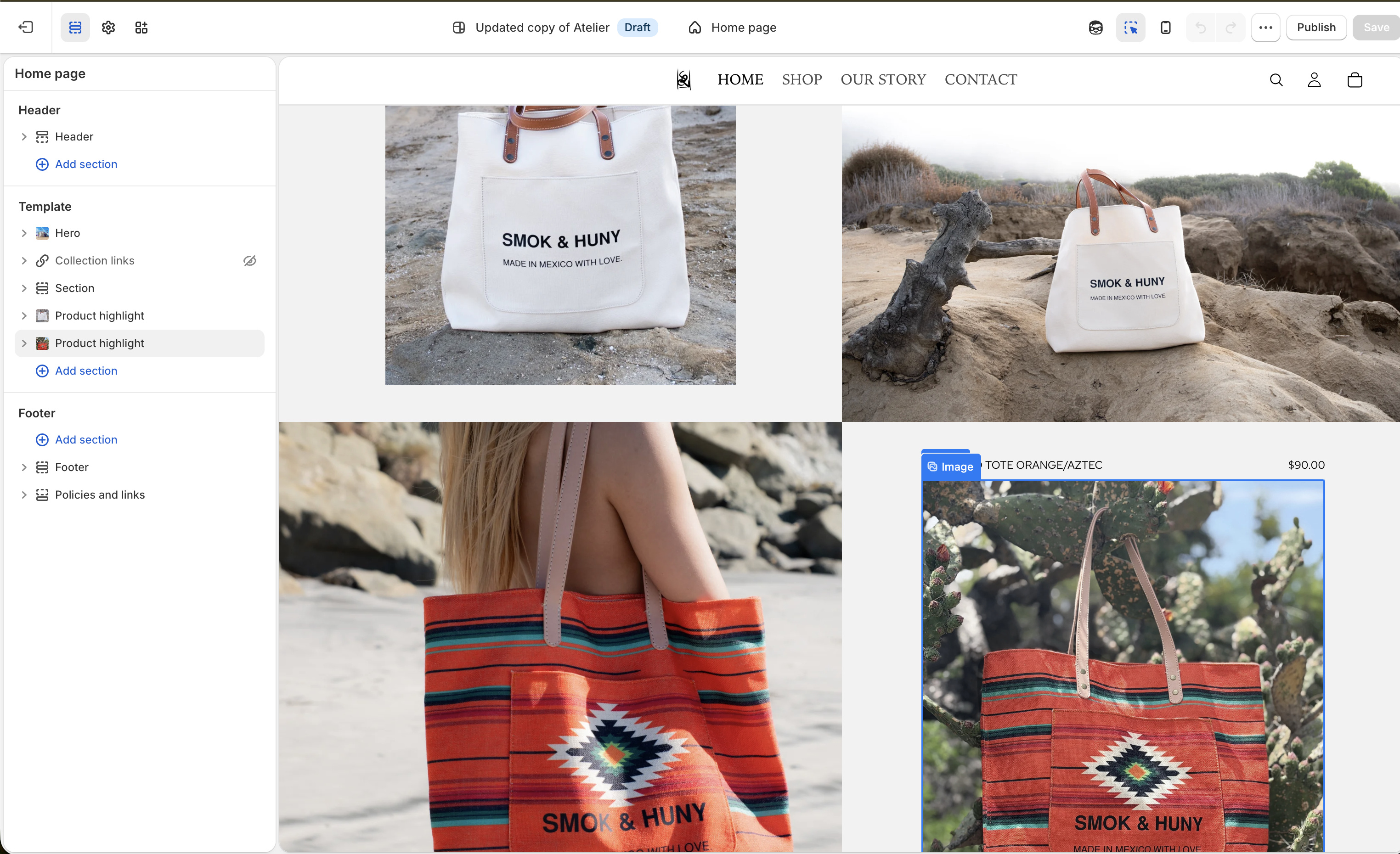
Add Product schema with price and availability, keep product descriptions in HTML rather than image-only, and write buying-guide content that answers comparison questions. AI shopping answers pull from structured product data — if yours is missing, your competitor's gets quoted.
How to check where you stand
Run the free 60-second audit at kanyonw.com/ai-audit. It runs 21 checks — rendering, schema, FAQ markup, llms.txt, speed, metadata — scores you 0–100, and ranks the fixes by impact. No signup.
If you'd rather have it handled, Kanyon Studio does this as a flat-quoted sprint for San Diego businesses: AI search optimization, or by city — Encinitas, Carlsbad, and North County.
